


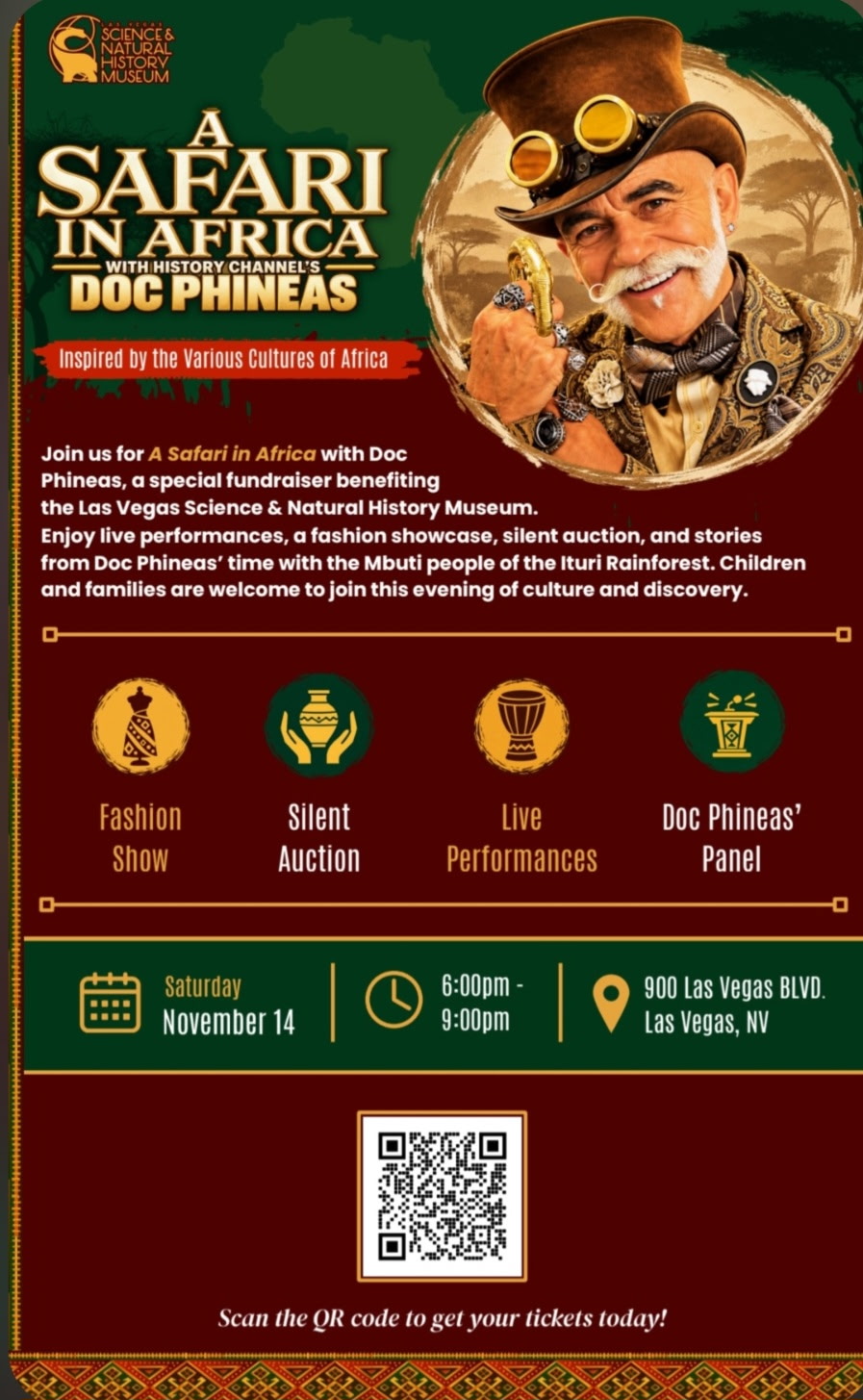
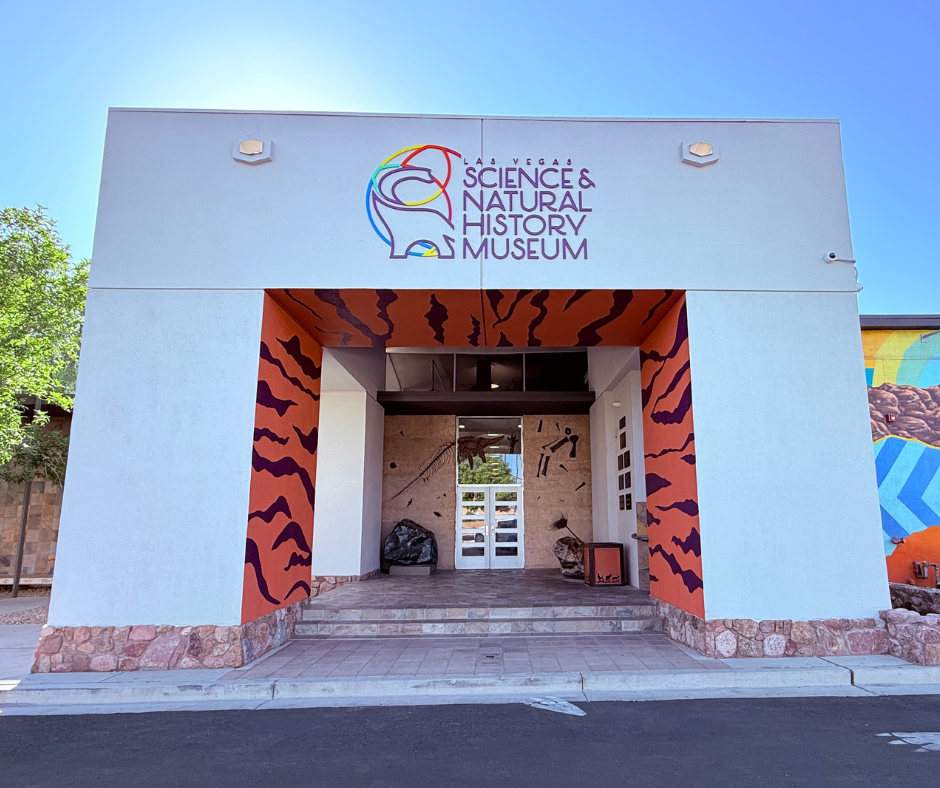
An evening of fashion, music, cultural storytelling and discovery awaits at the Las Vegas Science & Natural History Museum.
By Isabel M. Castro
What happens when an extraordinary journey through the African continent meets Las Vegas’s curiosity and creative spirit? On Saturday, November 14, the Las Vegas Science & Natural History Museum will open its doors for an evening that promises to take guests somewhere far beyond the familiar. Through fashion, live performances, cultural storytelling and a special presentation by History Channel personality Doc Phineas Kastle (Doc), A Safari in Africa with Doc will bring together art, history, science and philanthropy in support of one of Southern Nevada’s most important educational institutions.
For Doc, whose professional life encompasses archaeology, cultural anthropology, television, fashion and the arts, Africa represents much more than a destination. It is a place of remarkable natural beauty, extraordinary cultural traditions and deeply personal experiences that have shaped his perspective for more than five decades.
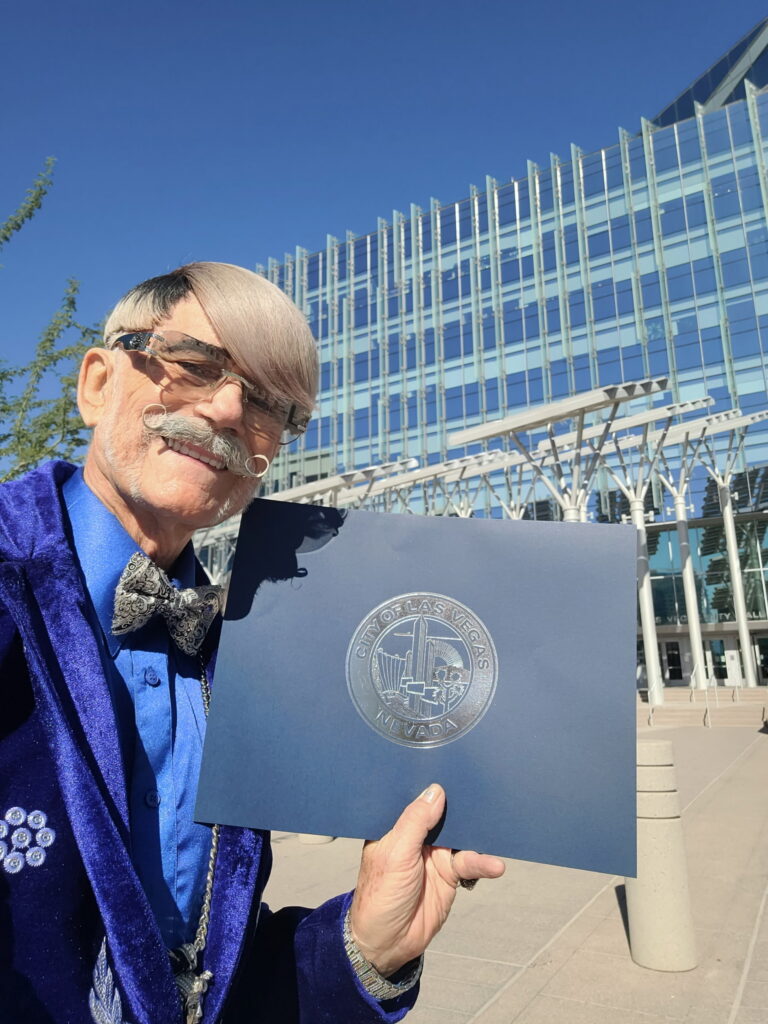
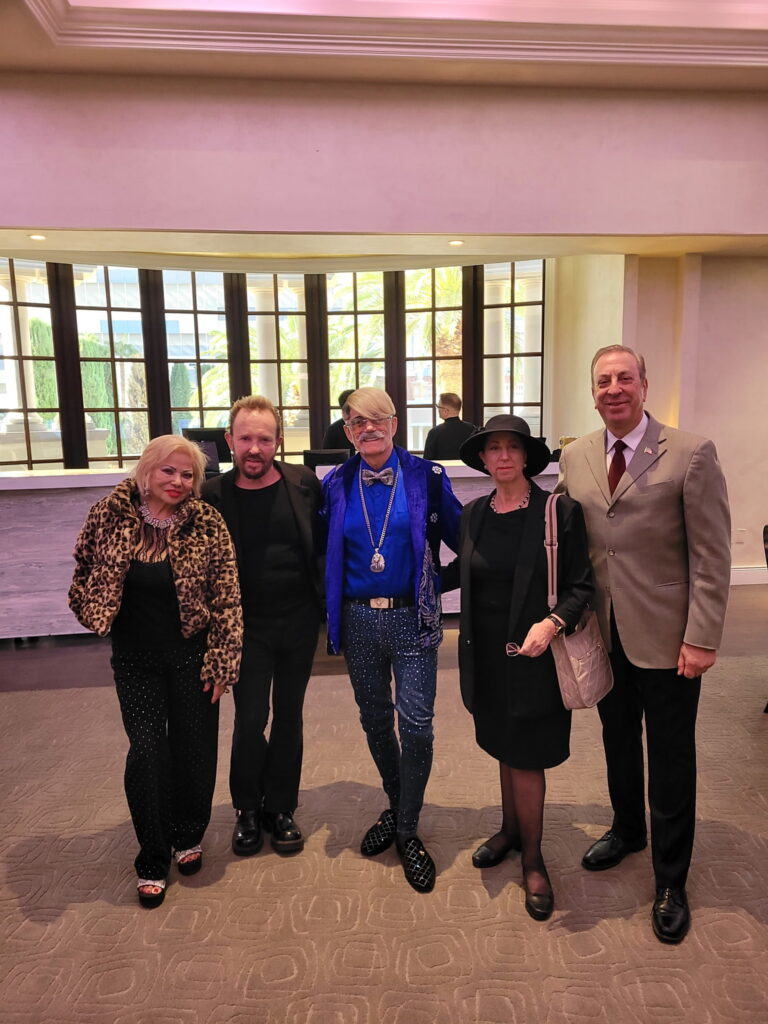
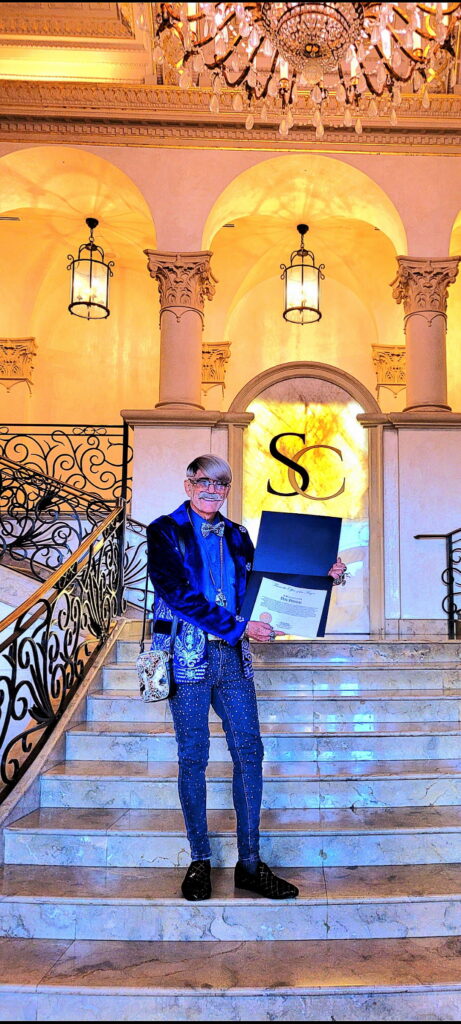
The celebration also carries hometown significance. Doc has received a City of Las Vegas proclamation and has been presented with the keys to the city, recognizing him with two distinctive civic honors. For a personality whose work has reached international audiences through television, the recognition also celebrates his connection to Las Vegas, its creative community, and, more importantly, the museum.
The evening will give guests a chance to meet Doc, hear stories from his travels, and explore the museum through a lively program that brings cultural expression and education together. Families, artists, educators, history enthusiasts and curious visitors are invited to participate.
An Extraordinary Journey Across Africa
Doc has been traveling to Africa since 1970. His initial fascination with Egypt grew from his academic interests in archaeology and cultural anthropology, as well as his Fulbright association with the University of California, Berkeley. One of his most memorable experiences was working with the extraordinary history surrounding the tomb of King Tutankhamun.
But Egypt was only the beginning. His travels took him to Tanzania and Kenya, where he witnessed African wildlife in its natural environment. That sense of wonder matters because Doc’s interest in Africa extends beyond its celebrated wildlife and archaeological treasures. His experiences in the Ituri Rainforest of the Congo Basin brought him into close contact with the Mbuti and the forest.
These personal reflections will shape the evening’s panel presentation. Rather than simply recounting a travel adventure, Doc hopes to encourage audiences to think about the connection between human communities and the natural world, and the importance of protecting both.
Doc: A Personality Like No Other
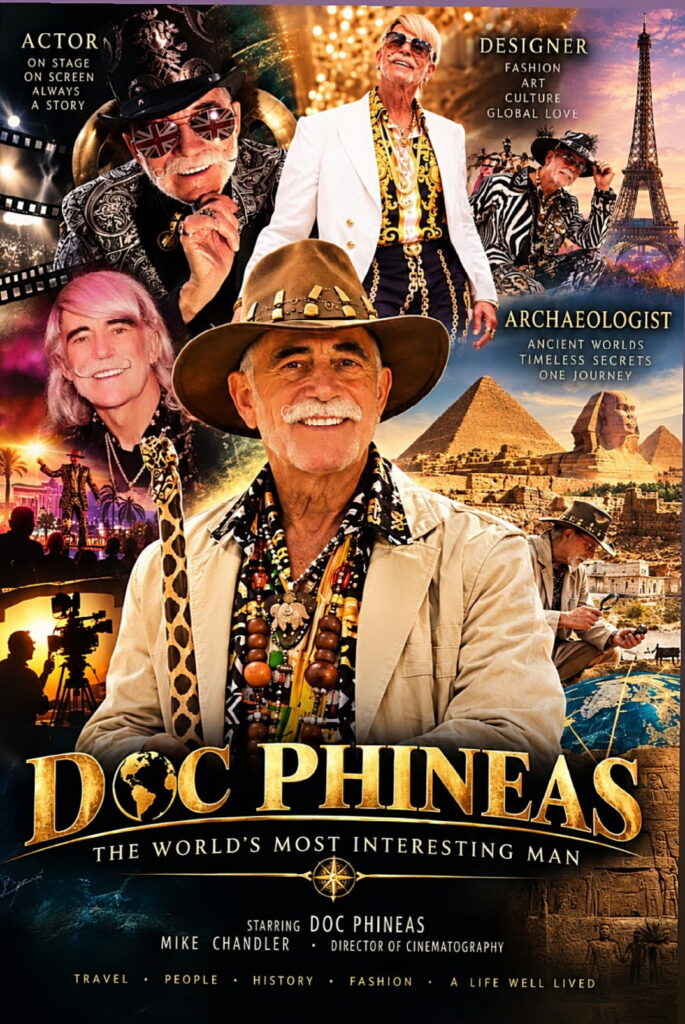
Known to television audiences for his appearances on the History Channel’s Pawn Stars, Doc is a multifaceted personality whose professional interests span several creative and academic disciplines. His background includes archaeology, cultural anthropology, fashion, costume design, acting, television and the visual arts.
A performer from an early age, he appeared on The Pinky Lee Show as a young entertainer before developing an international career that included fashion and design. His artistic interests and passion for history have continued to intersect throughout his professional life, informing his work with historical objects, textiles, design and cultural collections.
That combination makes him a particularly interesting guest for a museum event that connects scientific discovery with artistic expression. Moreover, he sees museums as important places for cultural identity and education.
An Unforgettable Evening of Discovery
Founded in 1989 by a small group of concerned community members and opened in July 1991, the Las Vegas Science & Natural History Museum has grown from a modest local initiative into a Smithsonian Affiliate and an institution accredited by the American Alliance of Museums.
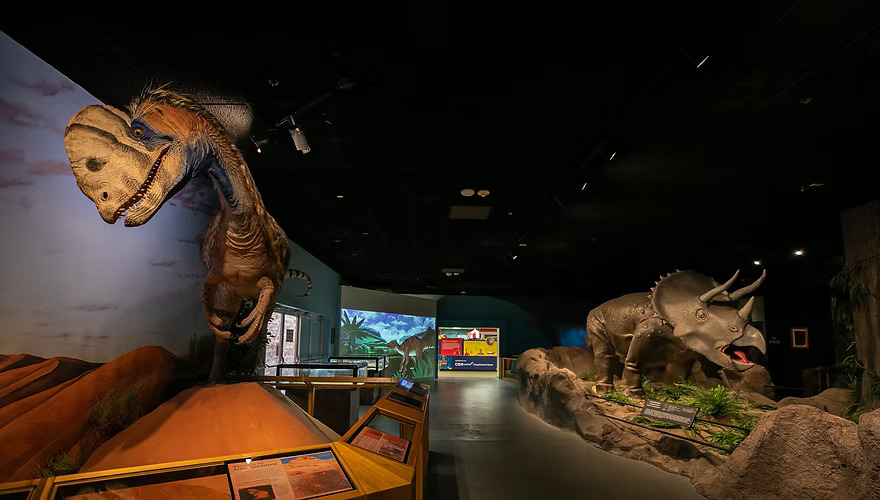
Its mission is to inspire curiosity and a greater appreciation of the natural world, science and ourselves through exhibitions, educational programming and research. The museum offers a remarkable journey across time and geography. Visitors can explore ancient Egyptian history in Treasures of Egypt, encounter marine life in its 3,000-gallon aquarium, and discover animals from around the world in the International Wildlife Gallery. The Young Scientist Center offers interactive experiences for younger visitors, while the Prehistoric Life Gallery introduces families to dinosaurs and Ice Age creatures.
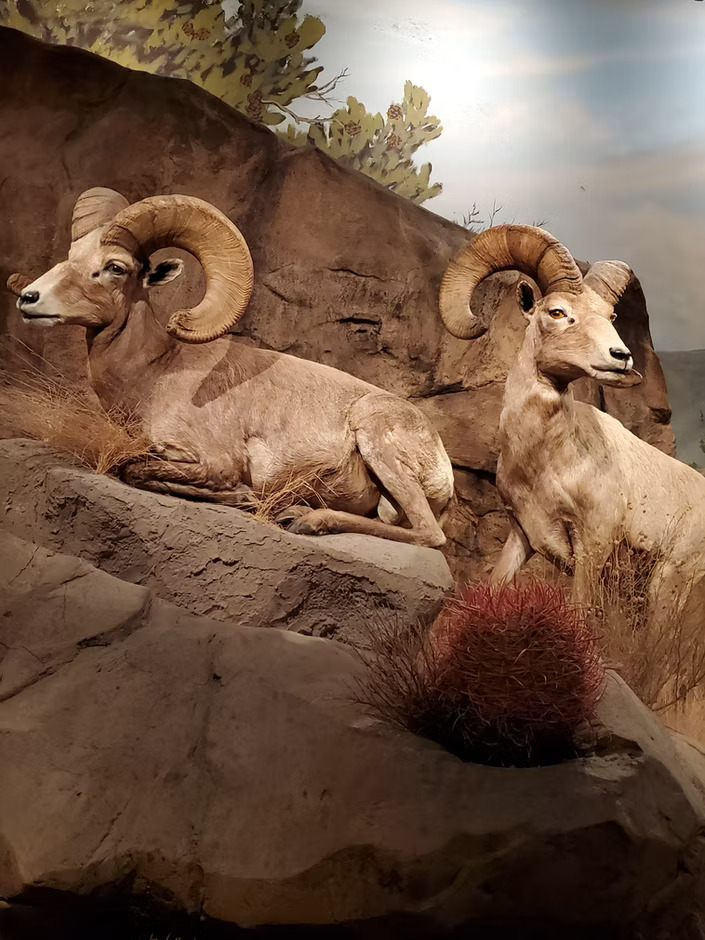
Other exhibitions focus on the remarkable natural history of Southern Nevada. Wild Nevada examines the Mojave Desert’s wildlife and ecosystems, while the African Savanna gallery brings visitors closer to the animal life and landscapes of another continent. The Geology Hall introduces the extraordinary world of minerals, gemstones and meteorites.
The museum’s value, however, extends well beyond what visitors see in its galleries. Its educational outreach brings science directly into classrooms and underserved communities. Through its Mobile Museum and STEM Education Community Outreach Program, students can engage with hands-on demonstrations and specimens that bring science and natural history to life.
Museum Director Laurie Thomas is particularly proud of this development.
“What started as a smaller outreach effort has developed into a significant community education initiative, bringing hands-on science and natural history experiences directly to schools and underserved communities,” Thomas explains.
The program reflects a broader commitment to making educational opportunities available to children who might not otherwise have regular access to museum resources. Through its outreach activities, the museum can bring fossils, taxidermy, casts and other specimens into classrooms, accompanied by museum educators and age-appropriate demonstrations.
For Thomas, the museum’s future is closely connected to its ability to reach more people and become an increasingly important community resource.
“I want the Museum to be more than a place families visit. I want it to be an essential community resource—a place where children discover new interests, educators find valuable partners, families learn together, and curiosity inspires lifelong learning,” she says.
It is an ambitious vision, but one that builds on the museum’s accomplishments over more than three decades.
Rare Treasures That Tell the Story of Our Planet
Among the museum’s most interesting scientific resources is a remarkable fossil specimen that Thomas considers one of its most significant and rare objects: the skull and lower jaw of a Rhynchotherium, an extinct elephant-like mammal. Discovered in southeastern Arizona, the specimen offers a fascinating glimpse into the diversity of prehistoric elephant relatives.
According to Thomas, it is considered one of the most complete Rhynchotherium skull specimens ever discovered, with both the skull and associated lower jaw preserved.
Specimens of this kind are exceptionally rare. For researchers, they offer valuable opportunities to understand the anatomy, evolution and diversity of prehistoric mammals. For museum visitors, they provide a tangible connection to a world that existed millions of years before Southern Nevada’s modern landscape.
Thomas describes the significance of preserving such a specimen in terms that reach beyond its visual appeal.
“We are not simply displaying an interesting fossil for people to look at. We are preserving a specimen that has contributed to scientific research and helped expand our understanding of prehistoric life.”
Museums are not simply places where objects are placed behind glass. They preserve scientific evidence, support research, and translate complex discoveries into educational experiences people of all ages can appreciate.
The Richard A. Ditton Learning Lab offers another opportunity to see this work in action. Visitors can observe paleontologists working with fossils and gain an understanding of the careful process of uncovering, preparing and studying specimens.
Together, these collections and research activities help establish the museum as an important resource for students, educators, researchers, families and visitors from across the country and around the world.
Additionally, the Smithsonian affiliation also strengthens the museum’s educational connections. Its partnership has included displaying 32 fluorescent mineral specimens on loan from the Smithsonian National Museum of Natural History, adding another dimension of scientific discovery for local audiences.
These collections are more than impressive displays. They represent a lasting educational resource for schoolchildren, university students, teachers, researchers, families and visitors from around the world. They also underscore why maintaining a museum requires continuous community investment: preservation, research, exhibit development, educational programming and access all depend on sustained support.
An Evening of Fashion, Music and Cultural Celebration
The fundraising event offers an opportunity to experience the museum in a different light. The evening’s program will combine live entertainment, fashion, storytelling and a panel presentation inspired by African cultural traditions and Doc’s experiences. The fashion showcase will highlight the creative relationship between clothing, identity, history and cultural expression. Across Africa’s many communities, textiles, color, adornment and craftsmanship communicate stories and traditions that have been passed from one generation to another. Fashion provides a particularly engaging way to explore these connections through the visual arts.
Live entertainment will bring additional energy to the evening. Performances by Shifting Sands Belly Dance and the UNLV Drum Circle will introduce audiences to the expressive power of movement and rhythm, creating a lively atmosphere for guests of all ages.
A silent auction will give attendees an opportunity to support the museum while bidding on special items. Proceeds from the fundraising event will benefit the museum’s nonprofit educational mission, helping sustain its exhibitions, research and outreach programs.
The featured panel presentation with Doc will bring the evening’s various themes together. Through stories from Egypt, Tanzania, Kenya, and the Congo Basin, he will share personal observations about wildlife, archaeology, cultural traditions, and his experiences with local communities.
The event also invites guests to explore the museum itself. Whether guests are returning visitors or encountering the institution for the first time, the evening provides an opportunity to appreciate the extraordinary educational resources available in the heart of Las Vegas.
Help keep discovery alive in Las Vegas
The Las Vegas Science & Natural History Museum represents an important investment in the city’s educational and cultural life. Its collections preserve irreplaceable records of the past, its exhibits introduce visitors to worlds beyond their everyday experience, and its outreach programs bring learning directly to children and communities. More importantly, the greater community is invited to connect with the museum and explore the many ways that one can help support the museum through individual or corporate sponsorship.
As Thomas looks toward the future, she hopes more residents will recognize the museum as a resource that belongs to them.
This auspicious celebration offers one way to become part of that future. Attending the event, purchasing a ticket, participating in the silent auction, becoming a museum member, volunteering, or making a financial contribution can all help sustain its mission.
The event details at a glance
- Date: Saturday, November 14
- Time: VIP meet-and-greet, 5:30-6 p.m.
- Doc: The Movie, The World’s Most Interesting Man, documentary in the main auditorium, 6-7:30 p.m.
- Doc Mayoral proclamation presentation, 7:30 p.m.
- African fashion show, 7:40 p.m.
- Doc Safari to Africa panel, followed by Q and A, 8:45 p.m.
- Location: Las Vegas Science & Natural History Museum, N. 900 Las Vegas Blvd.
- General admission: $20
- Meet-and-greet admission: $35
Children and families are welcome. For tickets, museum information, and opportunities to contribute, call (702) 384-3466; visit www.lvnhm.org. Follow on Facebook @LasVegasScienceNaturalHistoryMuseum, Instagram @lvsnmuseum, LinkedIn @Las Vegas Science Natural History Museum, TikTok @lvsnhmuseum.

